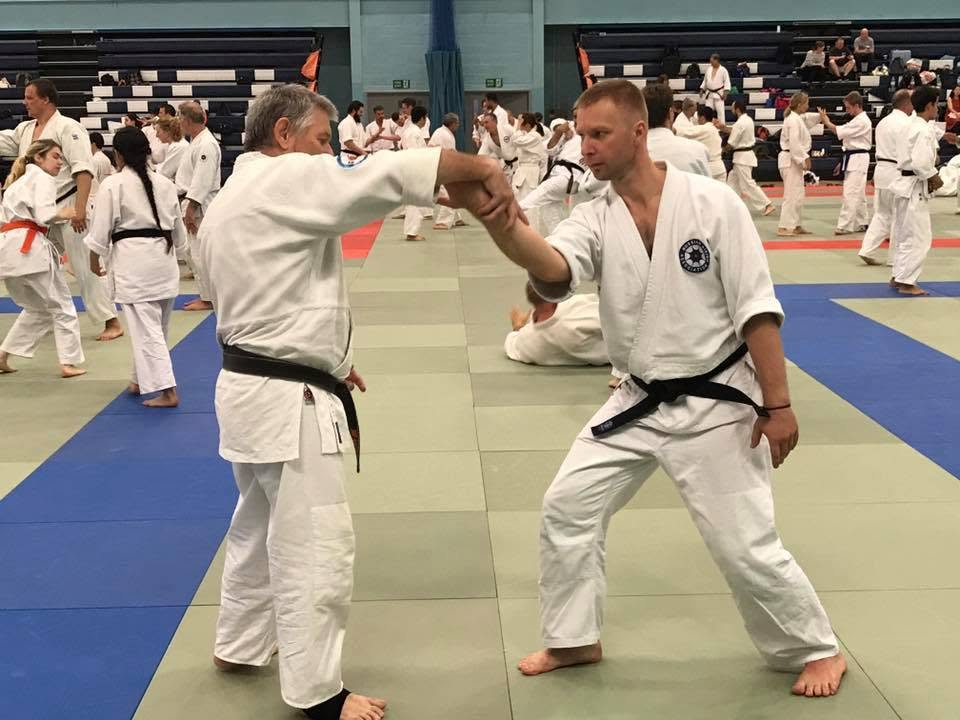
Published September 16, 2026 09:03
25th Fukushima Prefecture Youth Aikido Competition – November 7th, 2026
Fukushima Reconstruction Commemoration – FY2026
Guidelines for the 25th Fukushima Prefecture Youth Aikido Competition
- Purpose
To provide broad opportunities to practice Aikido, build physical strength and technical skills, foster the spirit of Aikido, and support the development of physically and mentally healthy youth. The event also aims to promote friendship among different regions through Aikido-based interaction, lay the foundation for lifelong sports participation, and disseminate information about the reconstruction of Fukushima. - Organizer: Fukushima Prefecture Youth Aikido Competition Executive Committee
- Co-organizer: Shodokan Aikido Federation (NPO)
- Supported by: Iwaki City
- Date & Time: Saturday, November 7, 2026 | Doors open: 9:00 AM | Opening ceremony: 10:00 AM
- Venue: Nanbu Arena, Training Hall (10-minute drive from JR Nakoso Station or Ueda Station)
102-58 Hosoya, Nishiki-machi, Iwaki City, Fukushima Prefecture 974-8232 | Tel: 0246-62-9111
Website: https://www.city.iwaki.lg.jp/www/contents/1001000004857/index.html
Access: Nearest stations—JR Joban Line “Nakoso Station” or “Ueda Station”
・ Please note that public transportation access is limited; it takes approximately 50 minutes on foot.
・ By car (taxi, etc.): Approx. 10 minutes.
7. Eligibility
(1) Competitors must be enrolled in their respective school level (elementary, junior high, or high school) on the day of the competition.
(2) Competitors must be covered by insurance (e.g., Sports Safety Insurance). 8. Competition Events (Events may be canceled depending on the number of entries)
(1) Demonstration Competition (Includes both prescribed and freestyle demonstrations; see separate sheet for details)
No. Category Eligibility Gender
1 Elementary (Lower Grades) Grades 1–2 Mixed
2 Elementary (Middle Grades) Grades 3–4
3 Elementary (Upper Grades) Grades 5–6
4 Junior High School Grades 7–9
5 High School Grades 10–12
(2) Randori (Sparring) Competition
No. Category Eligibility Gender
6 Elementary (Lower Grades) Grades 1–2 Mixed
7 Elementary (Middle Grades) Boys Grades 3–4 Boys
8 Elementary (Middle Grades) Girls Girls
9 Elementary (Upper Grades) Boys Grades 5–6 Boys
10 Elementary (Upper Grades) Girls Girls
11 Junior High School Boys Grades 7–9 Boys
12 Junior High School Girls Girls
13 High School Boys Grades 10–12 Boys
14 High School Girls Girls
(3) Mixed Team Competition by Category (Up to 2 teams per organization allowed)
No. Category Eligibility and Categories
15 Elementary School Division Elementary school students (① Prescribed Demonstration, ② Girls’ Randori, ③ Boys’ Randori)
16 Junior High School Division Junior high school students (① Prescribed Demonstration, ② Girls’ Randori, ③ Boys’ Randori)
※ Pairs consisting of elementary school students are permitted to enter the Junior High School Division demonstration category.
9 Competition Format (Please refer to the attached competition details for specifics)
(1) Demonstration Competition: Conducted via a tournament format with a flag-raising decision system; however, if there are three entries, a round-robin format (Tomoe-sen) will be used.
(2) Randori Competition / Mixed Team Match by Category: Conducted via a tournament format; however, if there are three entries, a round-robin format (Tomoe-sen) will be used.
10 Important Notes
(1) For demonstration pairs consisting of students in different grade levels, the entry must be made in the division corresponding to the higher grade level. Additionally, if the total number of participants is odd and a pair cannot be formed, one person per club may participate twice by changing partners.
(2) For Randori competitors, the club representative must verify the athlete’s skill level before submitting the entry.
(3) The organizers will provide first aid for injuries or illnesses occurring during matches but assume no liability thereafter. Competitors must bring their “MyNa Insurance Card” (Individual Number Card linked to health insurance) or “Eligibility Confirmation Document.”
(4) For all competitions, the size of the match area, judging methods, and other details may differ from previous events depending on the number of participants.
(5) A division will not be held if there are fewer than three pairs or three individuals participating. Events may be canceled depending on the number of entries.
(6) The schedule will be communicated to representatives at a later date once the number of participants has been confirmed.
11 Application Method: Please enter the required information into the “Participant List” and “Competition Entry” sections of the attached entry form and submit it via email. We will send a confirmation email within one or two days after we process your application.
12 Application Contact Email: ayataka@kcd.biglobe.ne.jp (Secretariat: Noguchi)
13 Participation Fee 2,000 yen per person (flat rate, regardless of the number of events entered)
14 Payment Destination Toho Bank, Uchigo Branch, Ordinary Account No. 768709
(Account Name) Fukushima Prefecture Aikido Competition Secretariat: Sumie Noguchi
15 Application Deadline October 9, 2026 (Fri) (for both entry and participation fee)
16 Match Pairing/Draw Pairings will be determined by the Secretariat on October 10, 2026 (Sat), taking into account region and skill level.
*Participation fees will not be refunded under any circumstances after the pairings have been determined. 17 Secretariat B-407, 11-5 Ohira, Uchigo-Takasaka-machi, Iwaki City, Fukushima Prefecture 973-8408
(Contact) Fukushima Prefecture Youth Aikido Competition Executive Committee Secretariat (Attn: Mr./Ms. Noguchi)
TEL: 0246-27-7338 E-mail: ayataka@kcd.biglobe.ne.jp
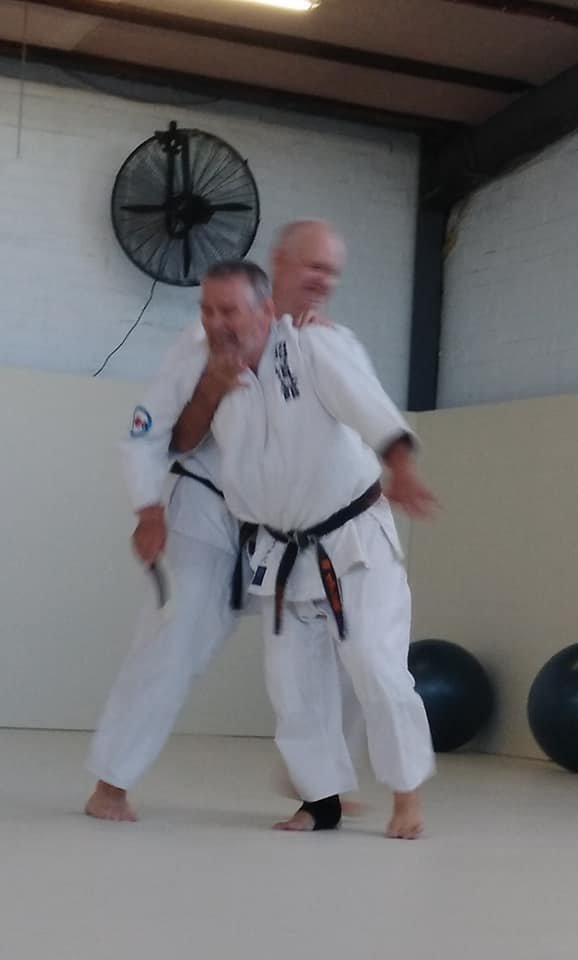
Demonstration Competition
(1) Divisions for Elementary School Students (Lower, Middle, and Upper Grades)
① Prescribed Demonstrations (4 Zagi [seated] techniques, 6 Tachiwaza [standing] techniques)
Content Notes
Zagi A Ai-gamae (matching stance) one-hand grab, push-down. Perform Right technique → Left technique. Switch roles after A
B Gyaku-gamae (opposing stance) one-hand grab, pull-down. Perform Right technique → Left technique. Immediately proceed to Tachiwaza after B
Tachiwaza A Shomen-ate (frontal strike) → Push-down → Kote-gaeshi (wrist turn-out). Switch roles after A
B Gyaku-gamae-ate (opposing stance strike) → Pull-down → Tenkai-kote-hineri (pivot wrist twist) Prescribed routine ends after B
② Free Demonstration
○ Must be performed within 30 seconds. (No points will be deducted for exceeding 30 seconds; evaluation is based on the performance within the allotted time.)
(2) Junior High and High School Division
① Prescribed Techniques (4 seated techniques, 8 standing techniques)
Content Notes
Seated A Shomen-uchi (frontal strike) → Push-down & Pin: Right side (omote/front), then Left side (ura/back). Switch roles (attacker/defender) after A
B Shomen-uchi → Push-down & Gyakute-dori (reverse-hand grip) → Kote-hineri (wrist twist) & Pin: Right side (omote), then Left side (ura). Proceed immediately to standing techniques after B
Standing A Shomen-ate (frontal strike) ⇒ Push-down ⇒ Kote-gaeshi (wrist return) ⇒ Sumi-otoshi (corner drop). Switch roles after A
B Gyaku-kamae-ate (reverse-stance strike) ⇒ Pull-down ⇒ Tenkai-kote-hineri (pivot wrist twist) ⇒ Mae-otoshi (forward drop) Prescribed techniques conclude after B
② Freestyle Demonstration
○ Perform within 45 seconds. (No points will be deducted for exceeding 45 seconds; evaluation is based on the performance within the allotted time.)
※Demonstration Competition Guidelines (Common to Elementary, Junior High, and High School)
※1 All demonstrations are to be performed unarmed. Perform prescribed standing techniques using a shuto (knife-hand) strike on the right side only.
※2 For prescribed techniques, perform the seated and standing techniques consecutively after the referee gives the “Hajime” (Start) command.
※3 For the freestyle demonstration, lower-grade elementary students and beginners may repeat the prescribed techniques.
※4 A time limit is set for the freestyle demonstration, but exceeding the time will not result in point deductions; evaluation is based on the performance within the allotted time. A chime or whistle will signal the end. 2. Randori Competition
(1) Matters not specified in these guidelines shall be governed by the Shodokan Aikido Federation Refereeing Regulations (revised September 1, 2023).
(2) Match Duration: Elementary school level and below—two 45-second periods (first half and second half).
Junior high school level and above—two 60-second periods (first half and second half).
(3) Regarding Randori for Elementary School Students and Below (Tournament-Specific Agreements)
① Refereeing criteria for the elementary school division shall prioritize safety. Additionally, to foster match progression that incorporates an awareness of tsukuri (setting up/positioning) from an early age, the tsukuri phase shall be actively evaluated.
② The elementary school division shall adopt the following refereeing criteria based on developmental stages. (Applicable to this tournament only)
(Bold, shaded sections indicate differences from the standard Aikido competition refereeing regulations.)
③ Detailed Judging Criteria for Elementary School [Lower Grades Division]
○ Tai-sabaki (Body Evasion) & Catch: … a. Evade the tanto (short sword) thrust and catch with both hands.
b. Close the distance (irimi) while evading, and catch with both hands.
○ Kuzushi (Off-balancing) & Tsukuri (Positioning): … a. After tai-sabaki, make contact with the opponent’s body using atemi (strike) without losing one’s own posture.
b. Position the elbow at the upper level (jodan) or lower level (gedan).
○ When executing a technique involving a rotation (tenkai), a score of “waza-ari” (partial point) shall be awarded if the rotation is completed skillfully, even if the elbow or wrist lock is not fully secured.
④ Common Items
○ Emphasis is placed on “correct thrusting” and “tai-sabaki.” Provide active guidance on “tai-sabaki” for actions where the distance is closed without an evasion. ○ “Correct Thrust” (Tsuki)… Judged in accordance with the Shodokan Aikido Federation refereeing regulations, with particular emphasis on the following points:
A thrust is valid only when spirit, sword, and body unify (ki-ken-tai-no-itchi).
a. Proper engagement distance (issoku-itto-no-maai) b. Spirited vocalization (kisei) c. Accurate technique combined with sustained awareness (zanshin)
- Mixed Team Competition by Category
(1) Elementary School Division
① Demonstration Competition (Elementary Division: Prescribed Tachi-waza / Standing Techniques) – No gender separation
② Girls’ Randori Competition (Girls; two 45-second halves)
③ Boys’ Randori Competition (Boys; two 45-second halves)
(2) Junior High School Division
① Demonstration Competition (Junior High Division: Prescribed Tachi-waza / Standing Techniques) – No gender separation
② Girls’ Randori Competition (Girls; two 60-second halves)
③ Boys’ Randori Competition (Boys; two 60-second halves)
※1 Gender composition for demonstrations is unrestricted.
※2 Elementary school pairs are permitted to participate in the “Junior High School Division” demonstration category.
※3 There are no grade restrictions for participants in the “Elementary School Division” Randori competition; however, the judging criteria will be based on the standards for 5th and 6th graders. Instructors should consider skill levels when registering participants.
※4 Each team consists of four members; no duplicate entries are permitted.
※5 If a team lacks sufficient members, a joint team formed with another organization is permitted. In such cases, clearly note this on the entry form.
These competition rules apply solely to this tournament, held on November 7, 2026. *Shodokan Aikido Federation Refereeing Rules (Revised September 1, 2023)
Key Changes
1 [Scoring]
・ Ippon (Full Point): 6 points; Waza-ari (Half Point): 4 points; Yuko (Effective Point): 2 points; Tsuki-ari (Thrust Point): 1 point (unchanged); Penalty: 4 points (unchanged).
・ The match ends when a 10-point difference is reached in the first half, or 18 points in the second half.
2 [Abolition of the “First-to-Score” Rule]
If a counter-technique is executed against a technique rated Yuko or higher, both techniques are recognized.
In exchanges involving rapid offensive and defensive maneuvers where multiple techniques are attempted, judgment is based on the technique being performed when the chief referee calls “Mate” (Stop). Additionally, if the same competitor achieves the effect of two techniques, the higher-value technique applies.
Example 1) A → A → B ⇒ Competitor A’s higher-value technique and Competitor B’s technique.
Example 2) A → B → B → A ⇒ Competitor A’s higher-value technique and Competitor B’s higher-value technique.
*Note: The match does not continue until an *Ippon* is scored. The exchange concludes when the action breaks, or when the chief referee calls “Mate” for safety reasons (e.g., if the executing competitor loses stability).*
3 [Counter-Techniques]
(Requirements)
Counter-techniques are permitted when both hands grasp (hold) one arm, or—even with a one-handed execution—when an opponent’s balance is broken via a joint technique. (Unchanged)
(Changes)
Provided the above requirements are met, counter-techniques are permitted regardless of which arm is grasped—whether it is the arm holding the tanto (short sword) or the arm not holding it. 4. Approach regarding “Out-of-Bounds”
A penalty for going out-of-bounds is issued “when one or both feet of one or both competitors go completely out-of-bounds, and the other foot is off the ground”; however, if both competitors step out-of-bounds momentarily during active engagement and then return to the contest area, no penalty is issued, and the match continues.
- Interpretation of “Penalty for High/Low Tanto Thrust”
Add the following interpretation: “No penalty shall be issued unless the action is dangerous.” - Interpretation of “Penalty for Grabbing the Uniform (Dogi).”
Add the following interpretation: “No penalty shall be issued for minor instances of grabbing the uniform that do not occur in a situation leading to a score.” - Those interested in taking part in this Aikido extravaganza are asked to contact Shodokan Aikido Honbu Dojo or the above personnel for an entry form